Amanda Nicole Curtis | Compass UX Session 2025

summary
Research uses 55 players across North America Europe and Japan who produce 260 diary entries plus about 900 images and videos via diary studies streams in-game walkthroughs and interviews with developers including Skyrim team and ConcernedApe. Key claims: players map game systems onto life (Skyrim stamina → social energy; Stardew bundles → a Notion task system), read moral messages (Zelda rewards experimentation), and assert agency by breaking or modding systems. Practical takeaway: learn system design and interpretation not superficial gamification.
AI-written summary · about
chapters (19)
- 0:00Video games and UX research
- 1:04Why video games matter for UX
- 2:32Video games' societal impact
- 5:46Player experiences via ethnography
- 11:49Games shaping real-world behavior
- 16:19Games as moral systems
- 19:31Player agency in game systems
- 24:29Learning beyond gamification
- 28:46Ethical participant-centered research
- 30:51Q&A: Favorite games & motivations
- 31:35Q&A: Ethical concerns in game UX
- 33:00Q&A: Free-to-play costs
- 33:21Q&A: Funding game research
- 35:07Q&A: Research scope & genres
- 36:13Q&A: Diverse user needs
- 36:35Q&A: Staying engaged in topics
- 37:58Q&A: Efficient research workflows
- 39:25Q&A: Breaking games & motivations
- 41:11Q&A: Modding culture & ownership
related talks
 19mGamification for Self-Tracking: From World of Warcraft to the Design of Personal Informatics Systems
 34mGames ≠ Subjective: How to craft engaging experiences by knowing your players
 58mThe Psychology of Play: The Power of Understanding Your Players
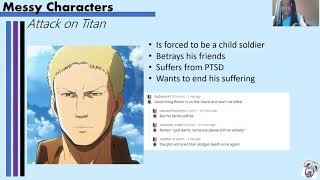 49mMessy characters and breadcrumb trails: Designing player investment
 19mFeelings and Videogames
 25mGame Design Meets UX
 58mExperience, Agency and Authorship: The Evolving Face of Story-Driven Game Design
 53mCreating Emotional Engagement Through Narrative and Game Design