Revisting Concatenative Languages with Creative Programming
summary
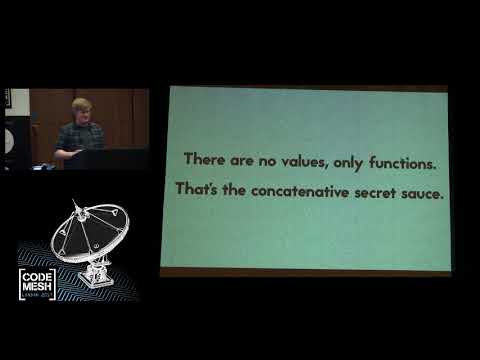
Demonstrates that concatenative languages treat everything as functions on a shared state (usually a stack), uses HTML5 canvas code that draw 20 squares with neon compositing and randomized parameters, shows quotations for control and anonymous recursion, and refactors the demo into named words to build layers. Claims FORTH stayed tiny and ported to 19 CPUs, cites Joy and Factor, and ships a small interpreter called white on GitHub that actually runs the examples.
AI-written summary · about
chapters (19)
- 0:00Intro
- 0:52Canvas
- 5:26Concatenative Programming
- 15:07Two Different Ways
- 15:31Fourth
- 16:21Portability
- 17:25Program Interface
- 18:39Compiler
- 19:28Joy
- 20:42Simple Syntax
- 21:26Other Competitive Languages
- 23:52Thinking Forth
- 25:16Extreme Programming
- 26:22Simplicity
- 29:02Special Vocabulary
- 29:55Creative Programming
- 43:39Closing Thoughts
- 44:31Resources
- 45:45White