A Pragmatic Introduction to Category Theories
summary
Demonstrates concrete code in Scala that builds Functor Applicative Monad implementations, implements a custom Maybe container and shows how map ap and flatMap behave, and uses scalacheck property tests to verify identity composition and associativity laws. Claims category-theory ideas simplify nullable values, error handling, parallel vs sequential operations and data validation, maps core abstractions to Cats, and shows the homemade library compiles and laws pass.
AI-written summary · about
chapters (22)
- 0:00Start
- 6:04WHAT IS A CATEGORY?
- 7:07COMPOSITION LAW
- 7:31IDENTITY LAW
- 7:54COMPOSITION - ASSOCIATIVITY
- 10:24MONOID'S RULES
- 11:08A PRACTICAL EXAMPLE
- 13:31MONOID INSTANCES (2)
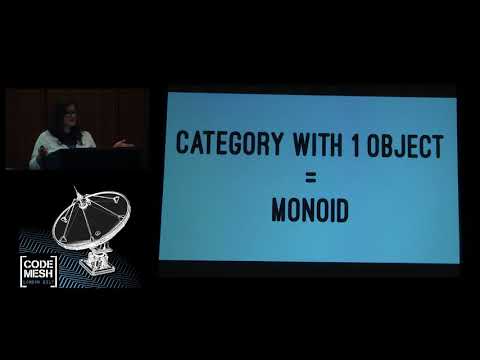
- 14:11CATEGORY WITH 1+ OBJECT
- 14:39CATEGORY IN A BOX
- 16:56FUNCTOR'S RULES
- 17:32LIFTING: CONTEXT VS CONTENT
- 19:43FUNCTOR FOR MAYBE
- 23:26APPLICATIVE FOR MAYBE
- 24:15BOX IN A BOX
- 26:09MONAD (AS FUNCTOR)
- 27:26BOXES IN A SEQUENCE
- 28:21FOR-COMPREHENSION
- 29:45MONAD FOR MAYBE
- 30:36FUNCTOR VS ENDOFUNCTOR
- 34:00SUMMARY
- 36:25WANNA KNOW MORE?
related talks
 42mA pragmatic introduction to Category Theory
 41mA Pragmatic Introduction to Category Theory
 52mCategory Theory Through Functional Programming (part 1/3)
 32mA practical introduction to category theory
 32mClassical Category Theory in Plain Scala
 57mApplied category theory and abstract algebra
 35mThe Functor, Applicative, Monad talk
 42mWhat did category theory do for us?