Colossus: The First Electronic Computer
summary
Explains how Lorenz-encrypted teleprinter traffic yields a recoverable keystream when two messages reuse the same indicator, how Bill Tutte detects a 41-position repetition in a single bitstream, and how engineers at Donisthorpe/Donas Hill and Tommy Flowers turn that insight into Colossus hardware that processes 6000 chars in 1.5s. Prototype development takes nine months, Mark II machines follow at six-week cadence, about 10 operational Colossi exist by war’s end and use ~1200 valves each to automate the delta and chi/kappa wheel analysis.
AI-written summary · about
chapters (21)
- 0:00Introduction
- 3:15Lorenz SS42
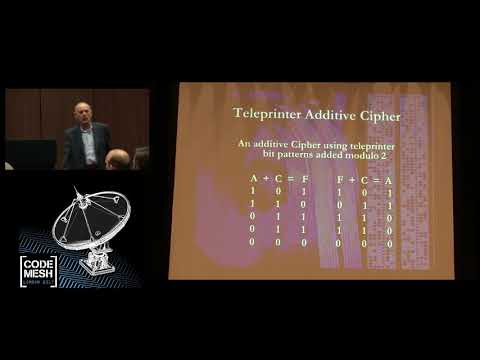
- 5:00Teleprinter Code
- 7:54Lorenz
- 8:49How does it work
- 11:46Bletchley Park
- 15:11Weakness of the cipher
- 17:09How did that get there
- 19:20Summer of 41
- 24:46John Tilton
- 27:40The Chemist
- 29:10Bill Tut
- 30:40Lorenz S42
- 33:55Wheels
- 34:15Teleprinter
- 35:05Challenge
- 36:53Delta
- 38:12Frequency Count
- 38:31Breaking the Cipher
- 39:59The Robinson
- 40:29Colossus
related talks
 53mThe Shoulders We Stand On
 55mComputing in the 1960s
 01h 10mMiniconf Keynote: The Who of CSIRAC
 12mCurses!!
 32mA History of Computing, from the Loom to Babbage's Machine
 49mThe Charming Genius of the Apollo Guidance Computer
 40mAll of this has happened before, and it will all happen again.
 11m“Wheels within whiles!” or possibly “Whiles within wheels!”