Spearheading The Future of Programming
summary
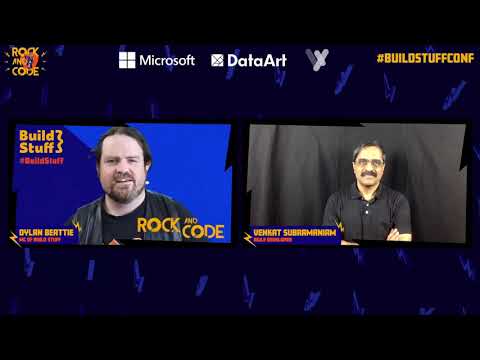
Argues that mainstream languages will adopt continuations within five years and that continuations plus coroutines make web and microservice conversations stateful rather than stateless; shows practical examples with Kotlinx.coroutines, Kotlin’s suspend and yield semantics, Java Streams (lazy evaluation) and JavaScript destructuring; traces the hardware shift to multi‑core (2003–2006) as the driver; recommends higher-level abstractions, composability (Unix-style pipelines / functional composition) and seamless asynchrony; cites a Chicago study and personal use of ~15 languages to argue diversity speeds learning.
AI-written summary · about
chapters (14)
- 0:00Introduction
- 0:44The future of programming languages
- 3:49ObjectOriented Programming
- 8:41Modern Demands
- 11:42Continuation
- 17:54expressiveness of code
- 22:00composability
- 28:32efficiency
- 31:12asynchronous
- 36:30Story
- 39:45Conclusion
- 40:55Learn Different Languages
- 41:25The Exciting Part
- 42:07Questions
related talks
 01h 01mSpearheading the future of programming
 32mStructured Concurrency: The paradigm shift
 01h 02mProcedural Programming: It Never Went Away
 48mStructured Concurrency: Writing Safer Concurrent Code with Coroutines...
 35mSoftware Engineering - Development in 100 Years Time
 40mRetrofitting Concurrency – Lessons from the Engine Room
 01h 08mThree Programming Disruptions
 53mBeyond paradigms: mastering languages in the 21st century