Content Creation in a Regulated Environment

summary
A content ops pipeline uses GenAI plus a “factual judge” framework to automate medical review across 20+ languages, turning experts into meta-experts who author evaluation datasets, rubrics and prompts. The agent-based flow (grader/critique/defender pattern) runs chained LLM judges, uses MCP and A2A protocols for tool and agent orchestration, enforces a <=16KB context window, and cuts time-to-market from weeks to hours while keeping human final sign-off and measurable quality gates.
AI-written summary · about
chapters (13)
- 0:00Introduction to talk
- 1:50Content creation challenges
- 5:08Expert role before automation
- 6:57Ideal workflow with agents
- 11:21Understanding current process
- 13:16Fact extraction and validation
- 17:17First automation attempt
- 22:27Agentic workflows explained
- 25:18Multi-agent evaluation system
- 28:53Final pipeline and expert role
- 33:12Expert evolution and metrics
- 34:38Lessons and future outlook
- 35:01Q&A and closing
related talks
 33mOperationalizing GenAI Applications with DevOps Practices
 24mAIGenOps: Integrating Generative AI into Platform Engineering
 22mValidating AI Outputs at Live Events
 40mCode-First LLMOps from prototype to production with GenAI tools
 39mBuilding a Real-World Adverse Media Pipeline
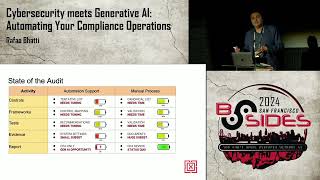 32mCybersecurity meets Generative AI: Automating Your Compliance...
 30mBuilding Reliable AI Agents for Publishing: A DSPy-Based Quality Assurance Framework
 57mUsing AI to automate content moderation and compliance with