Generative Spaces

summary
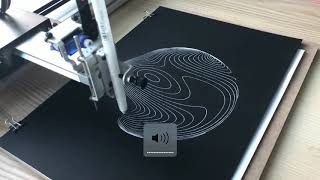
Generative programs run in Processing and drive a laser cutter to turn pixel rules into physical cubes and cardboard spheres that sometimes fall apart; a 2×2 grid yields one maze, a 3×3 yields 52 (26 if mirrored), a 4×4 produces 12,600 possible mazes and complexity scales rapidly. Experiments include a 10,000 particles system, Voronoi-based cell spheres, circle‑packing cubes, and emergent ant and orbital simulations that actually organize.
AI-written summary · about
chapters (19)
- 0:00Welcome
- 1:06Amazon spider web structures
- 3:56Desert life to cubes
- 8:30Generative algorithms and maze creation
- 12:26Substrate and recursive patterns
- 17:10Selling generative art prints
- 18:35Laser cutting algorithms
- 21:45Voronoi diagrams
- 26:24Particle systems
- 33:36Recursive subdivision
- 38:31Combinatorics and Invaders
- 40:40Why conferences matter
- 43:03Childhood inspiration
- 47:04Flash animations
- 48:35Circle packing
- 51:06Force-directed graphs
- 54:44Platonic solids
- 57:35Mystery of generative systems
- 1:01:05Emergence and blind ants