Xfinity Connected Living: building really, really big android apps
summary
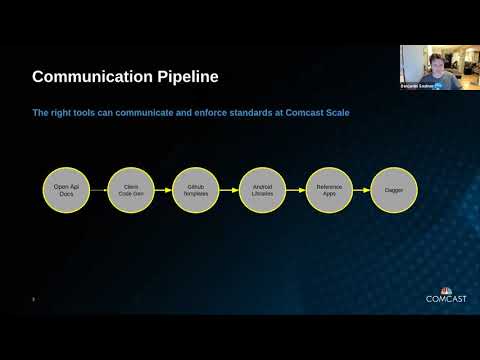
An app that serves millions weekly and ships every two weeks uses microservices plus OpenAPI code generator to produce Retrofit clients so API changes cause compile-time errors catch API changes rather than runtime crashes. Hundreds of engineers avoid a monolith by publishing Android libraries, using Dagger builders for required host bindings, and developing in small reference apps; builds that once took 30 minutes to compile and two hours for UI tests now isolate regressions, enforce a 90% coverage gate, and let teams iterate quickly while tolerating intermittent networks via MQTT and offline-first sync.
AI-written summary · about
chapters (23)
- 0:00Intro
- 0:41Xfinity Home App
- 4:19Communication
- 6:47Backend service
- 13:55Codegen
- 17:01Reference Apps
- 21:20RxJava
- 23:53Lessons learned
- 28:55Happy hours
- 29:30Questions
- 29:52Slack channel
- 30:30UI and unit tests
- 31:55Challenges
- 34:40Challenges at Comcast
- 36:05Productivity
- 37:27Linux
- 38:14Intermittent Network
- 39:33WiFi Pollution
- 41:35Building once deploy twice
- 42:23Kotlin multiplatform
- 44:32Wrap up
- 45:31Covid experience
- 46:44Different languages
related talks
 28mAndroid - a 4 year retrospective
 39mScaling an Android App from 1 to 100 developers with modularization.
 54m10X Android Development
 37mTackling Android Development at Scale
 40mScaling Android Apps
 41mWrite once, ship multiple times
 32mBuild a modular Android app architecture
 49mBuilding for the future at Snapchat