How deep learning can help interpret American Sign Language

summary
Prototype converts static ASL finger spelling to text using transfer learning on SageMaker Studio and MXNet, training on about 72K images across 29 classes (A–Z plus control tokens). Built with SageMaker image‑classification (P2/P3 GPUs), exported model to AWS DeepLens via Lambda and AWS IoT Greengrass, storing in DynamoDB and serving a gamified web UI that awards +5/−1 points. Models regularly beat a 95% threshold (examples show ~99%); accuracy still varies with hand position, lighting and distance.
AI-written summary · about
chapters (11)
- 0:00Intro
- 1:05Diversity and inclusion
- 2:19Introduction to American Sign Language (ASL)
- 3:35Methodologies for ASL interpreter
- 4:46Deep learning (DL)
- 8:25Dataset specification
- 12:14The AWS ML stack
- 14:49Test prediction
- 16:44Solution overview (training)
- 21:28Solution overview (deployment)
- 31:56Conclusion
related talks
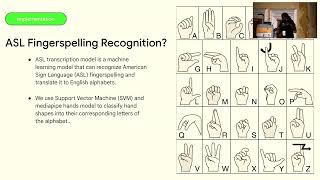 24mSIGN TO TEXT Unleashing the Power of Google AI for real time ASL transcription
 06mTeaching American Sign Language in Mixed Reality
 30mBuilding a Sign-to-Speech Prototype with TensorFlow, Pytorch, and DeepStack
 40mThe Effortless Development of Custom Computer Vision Models
 45mWhat if AI were the solution to understanding sign language?
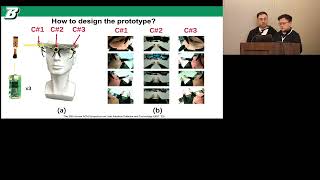 10mSignGlass: First-Person View Comprehensive and Generalizable ASL Translation Using Wearable Glass
 16mMyoSign: enabling end-to-end sign language recognition with wearables
 27mSign Language Recognition Improvements Since the London Keynote