Accounting for Agile software
summary
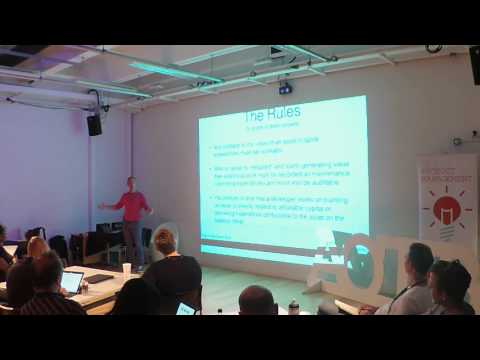
Shows how to ditch individual timesheets and instead extract feature-level cost from delivery tracking: count finished stories/points per feature, convert a team’s known weekly cost into percent allocation per feature, and give Finance a cost range (average throughput ± stddev or Monte Carlo percentiles like 65th/85th) rather than a single number. Tag work as Opex/Capex and mark bug reports with attribution rules; amortize feature cost across clients using uptake probability models so auditors can trace every number back to the tracking tool.
AI-written summary · about
chapters (21)
- 0:00Start
- 2:00The Problem
- 2:59What Finance wants
- 6:15The Rules
- 8:03Valuing software
- 8:46Outcome of this thinking
- 12:00Examples
- 13:58Behaviours
- 14:51Lessons
- 15:07Different approach
- 15:57Recognise
- 19:44CapEx/OpEx
- 24:01Budget 1st pass
- 25:45Outcome of this refinement
- 26:15Reconcile 1st pass
- 27:54Budget 2nd pass
- 28:51Reconcile 2nd pass
- 29:18Amortise
- 31:54How Finance used it
- 33:03Satisfying the Auditors
- 33:18Benefits
related talks
 31mProject Labor Cost Accounting for Agile Projects
 46mEstimates and complexity: a tale in 42 and a half minutes
 40mWhat Does the Fun Cost?
 27mFunding an Agile Train explained through holidays
 44mThe Math behind Project Scheduling, Bug Tracking, and Triage
 28m05 how we do developer productivity panel
 44mAgile metrics for predicting the future
 44mPredictably Agile