Know Your Limits — On Discovering Boundaries ...

summary
The talk explains how projects accumulate legacy failures when analysis and context boundaries are incorrect, and shows using Event Storming Procesowe to map process events and reveal hidden subdomains such as payments, reputation, and recruitment. It presents applying strategic DDD to design modules with a single source of truth, moving limit and reputation logic into an event-listening reputation module, and implementing aggregates and commands so code becomes modular, auditable, and readable.
AI-written summary · about
chapters (16)
- 0:00Introduction
- 2:09Programming boundaries
- 6:03First model approach
- 13:11Monolith problem
- 16:27Module dependencies frustration
- 20:02Contract tests and integration issues
- 23:54Events versus commands
- 27:05What is analysis?
- 30:20Business process and contexts
- 36:20Hidden subdomains and reputation
- 40:34Reputation module and events
- 43:06Aggregates and model flexibility
- 45:35Components and innovation
- 47:24Integration and implementation
- 48:06Simple versus complex domains
- 49:10Summary
related talks
 39mFrom Domain Boundaries to Software Architecture
 42mBounded Context — How to Modularize a System in a Few Steps
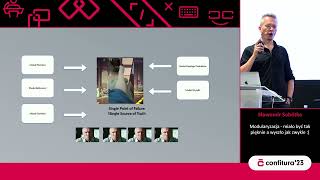 48mModularization — It Was Supposed to Be Beautiful but Turned Out as Usual :(
 55mCharting the uncharted: Discovering and evolving bounded contexts
 47mGetting modules right with Domain-driven Design
 50mAll Models Are Wrong: Lessons from Real DDD Projects
 47mDomain-Driven Design: A Complete Example
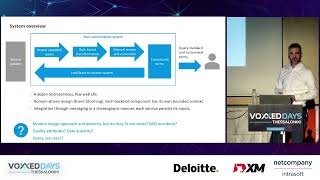 41mA practical tale of assessing a Microservices Architecture