CAn’t Touch This...

summary
Rowhammer mitigation called CATT implements a software-only defense by extending the OS physical page allocator and adding a dedicated kernel zone to physically isolate kernel and user memory (also implemented on x86 and ARM). A complementary boot-time blacklist via modified GRUB marks vulnerable rows. Evaluation on three DDR3 machines (Ivy Bridge/Haswell laptops/desktops) shows known rowhammer exploits fail after more than two days of probing, double-sided attacks still produce flips but cannot cross domains, and benchmarks (SPEC, IOzone, lmbench) show no measurable runtime overhead.
AI-written summary · about
chapters (17)
- 0:00Intro
- 0:26Big Picture: Rowhammer Attacks
- 2:51Dynamic Random Access Memory (DRAM)
- 4:51DRAM: Organization inside a Bank
- 5:46DRAM Read Access
- 6:39How Reliable is DRAM hardware?
- 8:49Many Bit Flips Observed
- 13:32Reviewing Attacker Assumptions
- 15:37Problems of Blacklisting
- 17:10CATT: Contributions and Challenges First defense that enables spatial memory isolation
- 17:56CATT: Design Idea
- 19:14CATT: DRAM-aware Memory Allocation
- 21:02CATT: Implementation
- 21:47System Setup
- 22:24Security
- 23:46Performance
- 25:22Conclusion
related talks
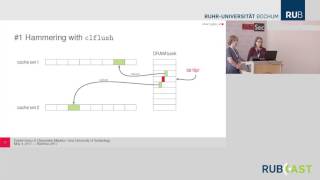 40mRowhammer Attacks: A Walkthrough Guide
 15mPosthammer: Pervasive Browser-based Rowhammer Attacks with Postponed...
 38mCSI:Rowhammer: Closing the Case of Half-Double and Beyond
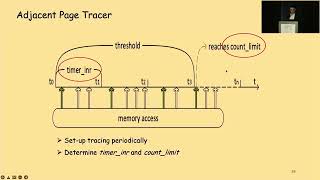 18mSoftTRR: Protect Page Tables against Rowhammer Attacks using Software-only...
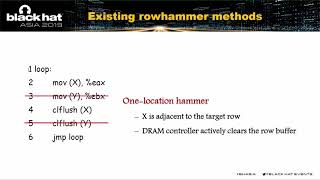 40mWinter is Coming Back
 14mGPUHammer: Rowhammer Attacks on GPU Memories are Practical
 25mOne Bit Flips, One Cloud Flops: Cross-VM Row Hammer Attacks...
 10mMcSee: Evaluating Advanced Rowhammer Attacks and Defenses via Automated...