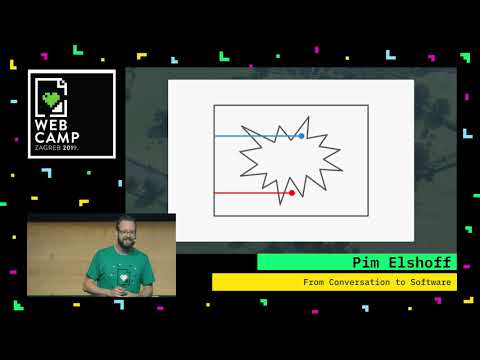
From Conversation to Software
summary
A practical method for avoiding wasted features: turn assumptions into questions, map user journeys and offer large / medium / small solutions rather than building what’s asked. Concrete tools used include user story mapping and a point-in-polygon geolocation trick (used to match addresses to 21 water-board polygons after copying StackOverflow code), Trello for sprints, and doubled upfront discovery for the first five of ten sprints. Results: about 10–20% of features change drastically when explored, and stronger discovery noticeably raises project success.
AI-written summary · about
chapters (20)
- 0:00Introduction and car crash story
- 1:09What is a story?
- 2:35Dismantling stories through conversation
- 3:40First big project and battery hopper feature
- 8:16Learning from the water board feature
- 9:20User stories and the 'why' chain
- 13:39Agile manifesto and user stories
- 16:31Not getting wet in projects
- 18:47Solutions over tasks
- 20:42Agile myths debunked
- 21:31User story mapping technique
- 24:54Two difficult clients in parallel
- 27:04Large medium small solutions
- 28:50Current approach and customer happiness
- 30:16Agile as ongoing conversation
- 31:30Q&A introduction
- 31:51Business value and impact mapping
- 35:04Developers avoiding conversations
- 36:09Initiating stakeholder conversations
- 37:41Closing remarks
related talks
 30mTurning stories into software
 37mHow to Lose Your Feature Bloat?
 29mDriving clarity in ambiguous projects
 43mHow to Lose Your Feature Overload
 47mStop Building Useless Software
 14mGathering Requirements, and Rapidly Building Proof of Concepts
 46mWeeks of coding can save you hours of planning
 22mLess tech, more value tacking digital waste with sustainble produ