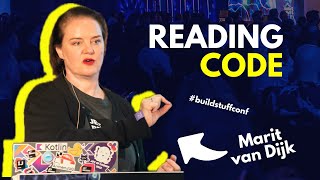
A Neatly Typed Message: Improving Code Readability

summary
Code readability is framed as a spectrum with concrete tradeoffs: a Microsoft study finds 2/3 of programmers cite understanding rationale as the top problem and reading consumes ~40% of time. The talk lays out four readability levels: comments, symbols/types, wrappers, concepts (protocols) and applies them to real code: email-splitting variants and delegate patterns. It compares delegate choices: weak/optional/mutable vs required immutable via initializer, weak-capture closures and wrapper functions, showing where incidental complexity helps or harms.
AI-written summary · about
chapters (15)
- 0:00Start
- 1:15Understanding the rationale behind a piece of code
- 2:26Readability is crucial for understanding
- 2:54programs must be written for people to read, and only incidentally for machines to execute
- 3:14the essential material (are) techniques used to control the intellectual complexity of software systems.
- 3:36Complexity . intrinsic . incidental
- 4:22World 1: API design
- 12:10Is complexity justified?
- 13:02End of World 1
- 13:18World 2: Delegation
- 14:41for readability
- 17:58Readability is contextual
- 18:28There is no castle with a princess inside
- 19:16Empathy is the god mode
- 20:09No such thing as the readability