The Challenge of LoRaWAN Antennas

summary
Title claims that antenna choice makes or breaks LoRaWAN devices; concrete examples show a quarter‑wave with an unbalanced coax current collapses link budget (measured drop toward the gateway near −40 dB), turning a 1 km test into a 20 km link after adding proper balance. Uses electromagnetic simulation and practical CW radiated‑power checks with a spectrum analyzer rather than naive VNA hookups. Notes: 900 MHz wavelength ≈ 34 cm, a PCB inverted‑F hits ~75% efficiency, and a compact design measures about −1.5 dBi peak gain.
AI-written summary · about
chapters (29)
- 0:00Introduction
- 0:30Why designing an antenna
- 1:28Practical examples
- 1:51Perspectives
- 2:38Electromagnetic simulation
- 4:29Key parameters
- 6:34Ideal lossless antenna
- 7:22Resonance structure
- 8:32Small antenna
- 8:42Directivity
- 9:21Radiated Power
- 10:42Directional Channel
- 11:12Effect of Terminals
- 12:07Two wavelengths
- 15:21Internal Measurement
- 15:43Reflection
- 16:07Measurements
- 16:24Open Source Project
- 17:27Design
- 18:20Simulation
- 19:38Radiation Efficiency
- 19:52Results
- 21:07Internal Project
- 22:59Conclusion
- 23:46Github
- 24:17I have a project
- 24:44Metal is a conductive material
- 25:25Pay attention
- 25:45Fuzzy Faraday Cage
related talks
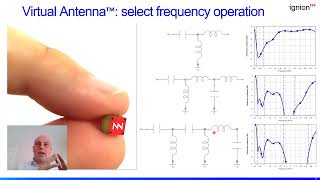 53mExpand the connectivity of your LoRa Generic Node sensor with Virtual Antenna™
 36mBuilding LPWAN Solutions that last for Years
 53mBecome a Wireless Connectivity Ninja 101
 17mIntegrated antennas design for IoT devices
 06mExploring LoRa for Long-range Through-wall Sensing
 15mSaiyan: Design and Implementation of a Low-power Demodulator for LoRa Backscatter Systems
 13mPushing the Physical Limits of IoT Devices with Programmable Metasurfaces
 15mHow to design LoRaWAN® products for scale