Deploy and Destroy Complete Test Environments

summary
Claims that service virtualization plus containers and cloud let teams provision full test environments on demand, with concrete tools and limits: use Hoverfly (open source HTTP proxy based recorder) or Parasoft Virtualize (protocol‑rich engine with Environment Manager and REST API), prefer spec‑driven virtual assets over brittle record‑and‑playback, containerize environments with Docker and Azure for scalability, start small, and case studies show real gains for an education provider and a large Dutch bank.
AI-written summary · about
chapters (11)
- 0:00Start
- 1:27Continuous Delivery
- 6:27T-Shaped Testers
- 7:01Test Environments
- 9:03Surface Fertilization
- 9:57What's the Service Fertilization All About
- 10:52Virtual Assets
- 11:59Benefits to Using the Record and Playback Approach
- 15:28Creating a Useful Successful Virtual Asset
- 23:21Overfly
- 25:57The Environment Manager
related talks
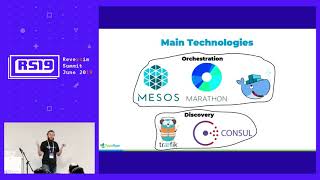 30mDeploy and Destroy: Testing Environments
 27mTesting Cloud Apps: Mocks vs. Service Virtualization vs. Remocal Tools
 38mService Virtualization: Path from Decision to Execution
 32mDeploy and Destroy: Testing Environments
 42mMicroservice Testing Techniques
 36mService Virtualisation and AI for Shift-Left Testing
 11mDeath to Test Environments
 28mContinuous Integration Testing: Fully Test your Microservices Application, Early and Often