Aperture: A Non-Cooperative, Client-Side Load Balancing Algorithm

summary
Twitter’s Finagle replaces random per-client windows with a ring-based continuous coordinate aperture that composes client-local orders and uses power-of-two-choices to pick two coordinates per request, normalize weights, and compare loads. Result: far fewer sessions and more even request spread—78% drop in request-rate standard deviation, 91% fewer incoming connections, ~75% fewer failures, ~20% latency reduction, 25% less CPU and half the GC time in production.
AI-written summary · about
chapters (9)
- 0:00Start
- 0:49SERVICE-TO-SERVICE LOAD BALANCING
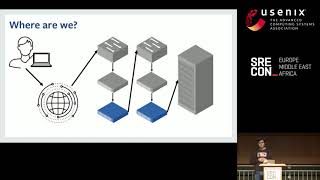
- 2:14EXAMPLE SERVICE TOPOLOGY
- 10:46COMPOSITE RINGS
- 12:19CONTINUOUS COORDINATES
- 16:04MULTIPLE SERVICE RINGS
- 16:25CONTINUOUS COORDINATE MODEL
- 17:08DYNAMIC APERTURE SIZE
- 17:59RESILIENCY
related talks
 40mMastering Chaos: Achieving Fault Tolerance with Observability-Driven...
 46mKeeping the Balance: Load Balancing Demystified
 39mLoad Balancing Building Blocks
 19mLoad is not what you should balance: Introducing Prequal
 21mStateless Datacenter Load-balancing with Beamer
 11mLightning Talk: The Adaptive Edge: Balancing Cost Efficiency, Usability, and Performance Tradeoffs
 16mTowards Optimal Rack-scale μs-level CPU Scheduling through In-Network Workload...
 16mKeynote: LLM-Aware Load Balancing in Kubernetes: A New Era of Efficiency