Stack Smashing
summary
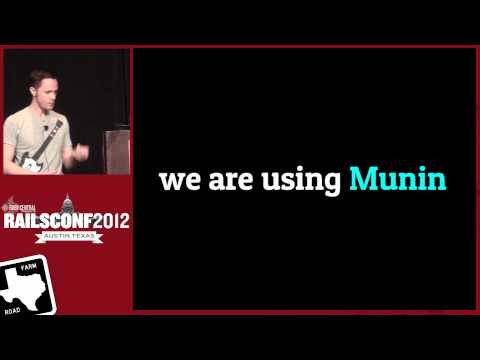
A Major League Gaming stack shrinks from about 100 virtual machines to two physical app servers while supporting 13–16 interconnected Rails apps and millions of page views; provisioning and orchestration run in Chef recipes, deployments use a reusable Capistrano gem and Jenkins-driven opt‑in continuous deployment, app servers move from Thin to Unicorn with worker signaling for capacity, resilience relies on DNS aliases for services (DB/Redis/memcache), Resque for background jobs, Munin graphs, and Cucumber-style BDD checks for infrastructure.
AI-written summary · about
chapters (13)
- 0:00Introduction
- 2:19Infrastructure consolidation
- 8:44Migration strategy lessons
- 12:15Unicorn server deployment
- 15:27Service configuration pitfalls
- 17:35Background jobs with Rescue
- 19:47Capistrano automation
- 23:21Application monitoring
- 26:39Infrastructure testing with BDD
- 31:39Continuous integration
- 34:32Continuous deployment
- 36:43Scalable infrastructure principles
- 40:41Conclusion and Q&A preparation
related talks
 45mLarge-Scaled Deploy Over 100 Servers in 3 Minutes
 51mApplication Stacks for the Modern World
 47mDeploying Like a Boss: From 2 Servers to 20,000
 54mBuilding and Managing a Ruby Infrastructure
 40mHow Shopify Scales Rails
 26mMonolith-ifying perfectly good microservices
 40mDeploying any Rails application to any cloud in minutes
 33mDeveloping for Multi-Component Environments While Keeping Your Sanity