Real-TIme Context Engineering for Agents
summary
Claims a fast alternative to RAG: use application IDs (user/session/article/order) to fetch targeted context within seconds rather than retrieve text chunks via vectors, and shows a working pipeline that streams events to a low‑latency store and serves them to agents. Demonstrates Hopsworks feature store inside Python agents, introduces the Agent-to-Agent protocol, and walks a TikTok clone example that achieves sub‑second to single‑second context freshness and end‑to‑end logging for eval.
AI-written summary · about
chapters (16)
- 0:00Real-time context engineering intro
- 1:03Interactive agents need fast responses
- 2:25In-context learning basics
- 5:12What is context and why it matters
- 7:20Private vs real-time data as context
- 9:05Fine-tuning vs context engineering
- 11:10Context data types for agents
- 12:36What makes context useful
- 15:03Context freshness importance
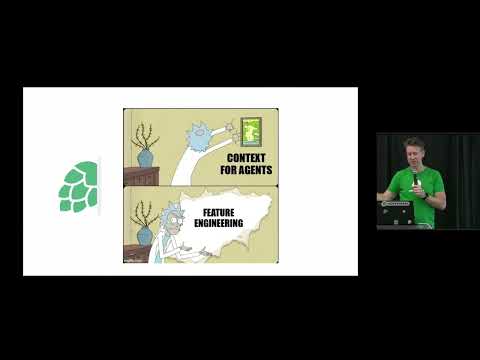
- 16:49Feature vs context engineering
- 18:34Agent API vs LLM API
- 20:44Real-time context architecture
- 23:11Unstructured vs structured data
- 27:22Streaming data pipelines
- 29:07Evaluating agent performance
- 33:24Resources and closing
related talks
 24mReal-Time Context Engineering for LLMs
 37mContext is King in AI Agents
 15mUnderstanding Context Engineering for Agentic Systems
 31mBuilding the Context Engine AI Agents Need
 25mFrom SQL to Python: Building Data Context for Agents and people
 31mBuild Intelligent AI Agents With Context Engineering
 57mCrafting Intelligent Agents with Context Engineering
 27mContext is the new code: The context development lifecycle