From SQL to Python: Building Data Context for Agents and people
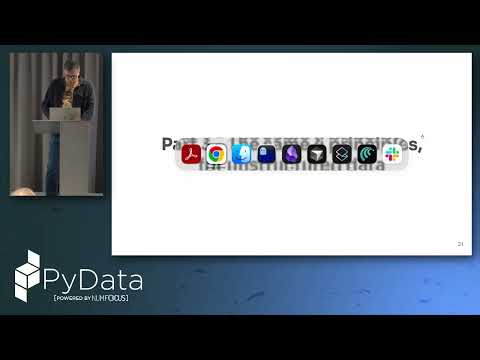
summary
Claims that adding concrete multi-layer context (storage, metadata, dataset, code) moves agents from brittle demos to reliable results, citing 95% accuracy gains reported by Anthropic and concrete internal speedups of 3x–9x. Implements a Python-first stack: a Dataset DB, a transpiler from Pydantic schemas to tables, vectorized metadata ops, lineage and precomputed embeddings, and a skill/MCP delivery path. DataChain prototypes show the approach scales to millions of files and cuts recompute/token costs dramatically.
AI-written summary · about
chapters (13)
- 0:00Data context for agents
- 2:12Data context transforms performance
- 3:37Structured data principles
- 5:44SQL schema challenges
- 7:48Lineage for agent context
- 10:22Unstructured data extension
- 13:35Multi-step Python problems
- 16:01Schema for unstructured data
- 18:31Dataset classification
- 20:00Python lineage workflows
- 21:46Performance gains 3x to 9x
- 23:11SQL vs Python data context
- 24:35Summary & Q&A
related talks
 37mContext is King in AI Agents
 29mThe AI Agent Memory Landscape
 40mReal-TIme Context Engineering for Agents
 29mHow to Structure Context to Make Your Agents Smarter
 31mBuilding the Context Engine AI Agents Need
 15mUnderstanding Context Engineering for Agentic Systems
 01h 04mBuilding AI Applications the Pydantic Way
 23mConnecting the Dots With Context Graphs