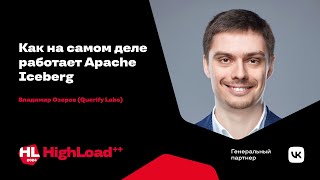
Hands-on with Apache Iceberg

summary
Interactive, hands‑on walkthrough that actually writes and reads Iceberg tables: end-to-end example using PyIceberg with a LakeKeeper catalog and MinIO/S3, plus Polars, DuckDB, Trino and Daft for reads and queries. Shows concrete metadata layers (snapshot → manifest → data), schema evolution, partitioning, deletes/upserts, time travel and branches, snapshot cleanup and small‑file compaction; demo updates 1.5M rows, a repeated query runs in ~6s, and a Kafka Connect pipeline writes streaming data into Iceberg successfully, so the examples and tooling are executable and reproducible.
AI-written summary · about
chapters (8)
- 0:00Introduction
- 5:44Why Apache Iceberg matters
- 17:50Iceberg metadata layers
- 28:10Querying with Polars and Trino
- 35:37Schema evolution and time travel
- 42:27Partitioning strategies
- 51:00Streaming with Kafka
- 1:04:29Final exercises and prizes
related talks
 41mTip of the Iceberg
 49mHow Apache Iceberg Really Works
 46mTake the Polar Plunge: A Fearless Introduction to Apache Iceberg™
 28mBridging Python and Apache Iceberg: The Power of PyIceberg
 37mApache Iceberg: An Architectural Look Under the Covers
 31mHow Apache Iceberg Enables Multi-Engine Data Platforms
 05mMaking Iceberg walk and talk like Postgres
 52mSetting Up Iceberg Tables in Snowflake