Solving very simple substitution ciphers algorithmically
summary
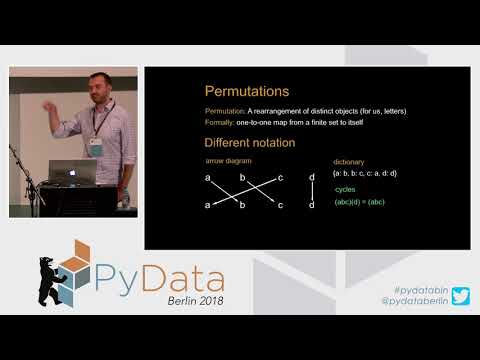
Claims an algorithm that recovers monoalphabetic substitution keys when the language is known and spaces are preserved, encoding text as a bigram frequency matrix and searching permutation space by random transposition moves. Notes 26! ≈ 4×10^26 permutations would take ~13 trillion years at a million checks per second, so the method uses swap-based local proposals and a likelihood product over bigram counts as the objective. Implements a NumPy prototype with ASCII heatmap visualization, and reports it succeeds roughly three out of five runs.
AI-written summary · about
chapters (9)
- 0:00Substitution ciphers intro
- 3:57Encryption decryption defined
- 7:28Permutations in decryption
- 15:18N-grams as language fingerprints
- 24:11Naive algorithm limits
- 28:45Permutations to transpositions
- 33:00ML objective function
- 39:25Live decryption demo
- 40:53Q&A on ciphers
related talks
 55mThe secrets of Cryptography
 56mHomoglyph-Based Attacks: Circumventing LLM Detectors
 26m“bluegiraffeplaysball” or Make Passwords Great Again Using zxcvbn
 12mUse Your Words: Designing One-time Pairing Codes to Improve User Experience
 32mSymmetric Cryptanalysis I
 58mBreaking Enigma with the Power of Modern C++
 11mMutating text toward better nonsense?!
 31mInterleaved Codes For Cryptography