Quantified Self: Analyzing the Big Data of our Daily Life
summary
Claims that self-tracking yields actionable results — blood pressure logs lead to medication changes — and demonstrates the actual tooling and limits: pandas and IPython with numpy and scikitlearn for analysis, data from Fitbit and Moves plus Wi‑Fi scales and OBD adapters, messy heterogeneous exports, inconsistent APIs and no raw accelerometer access. Shows surprising counts (days with ~15,000 steps, typical >10,000) and a built cockpit-ready reaction test prototype — reaction time 137 ms — used to predict fitness for duty.
AI-written summary · about
chapters (10)
- 0:00Quantified Self intro
- 5:52What is Quantified Self
- 11:13Tracking tools and gadgets
- 21:57Data storage challenges
- 27:04Data standardization issues
- 31:23Analyzing tracking data
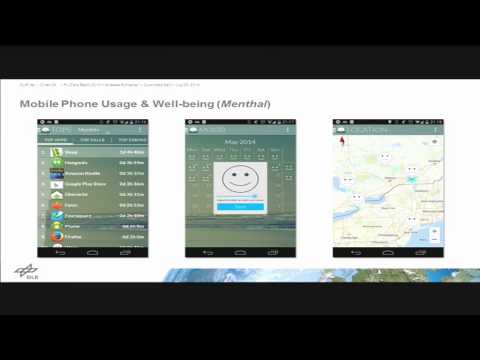
- 35:20Mobile analytics and visualization
- 37:05Machine learning for behavior
- 41:22Research and future directions
- 42:06Q&A
related talks
 01h 05mWhat the hell am I doing?
 14mDoes fitness data make the average person healthier?
 01h 04mTake Control of the Data of You
 01h 00mTake Control of the Data of You
 43mMade to Measure? The Biases and Boundaries of Biometrics
 55mTake Control of the Data of You
 08mSenseCollect: We Need Efficient Ways to Collect On-body Sensor-based Human Activity Data!
 22mUsing data to improve physical therapy for people with neurological diseases