A 🐍's guide to Unicode

summary
Explains what Unicode actually is (databases, properties, not just an encoding), shows 17 planes of code points and 65,536 per plane, demonstrates code point vs grapheme mismatches (combining marks, precomposed forms), recommends NF KC for normalization and casefold for comparisons, points to stdlib tools like unicodedata and idna and the regex third‑party for grapheme clusters, describes PEP 393’s storage change in Python 3.3 and shows it fixes the old surrogate/emoji problem.
AI-written summary · about
chapters (21)
- 0:00Introduction
- 1:17History of written text
- 5:43What is Unicode
- 7:29Terminology
- 9:33Code Points
- 13:21Compatibility
- 16:11Case
- 18:04Case in other languages
- 21:41Types of abstractions
- 23:16Python 2 Unicode
- 24:12Python 3 Unicode
- 24:57The pile of poo
- 27:46Unicode Data
- 29:59Unicode in Python 3
- 30:23The Golden Rule
- 32:16File Encoding
- 34:27Combining and Composing
- 35:48Regional Indicator Symbols
- 38:17Unicode in Python
- 39:39String comparisons
- 42:23Conclusion
related talks
 31mThe Power ⚡️ and Responsibility 😓 of Unicode Adoption ✨
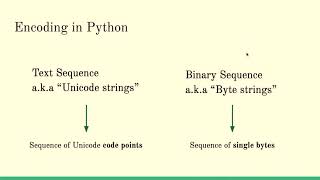 28mMaking Acquaintances with Exotic Encodings
 33mPython's Transition to Multilingual Programming
 24mWhy `len('😶🌫️') == 4` and other weird things you should know about strings in Python
 25mWhy len 4 and other weird things you should know about strings in Python
 43mFun With Python and Emoji
 35mText Is Not Text: The History of Strings in Python
 35mPython, Locales and Writing Systems