Scripting the Internet of Things
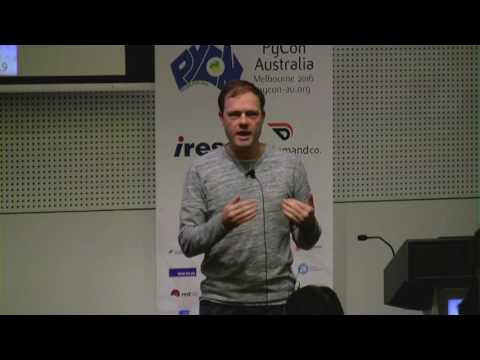
summary
A reimplementation of Python 3 runs directly on tiny microcontrollers: MicroPython fits interpreters into ~256 KB flash / 64 KB RAM-class devices, runs on ESP8266 boards with 32 KB RAM and 4 MB flash, and on BBC micro:bit with 256 KB ROM and ~9.5 KB heap. The project uses pointer-tagged small-int representation and optimized method calls to avoid heap churn, raised ~$180k then ~$50k on Kickstarters, and demonstrates live Wi‑Fi sockets, filesystem and GPIO working.
AI-written summary · about
chapters (26)
- 0:00Introduction
- 2:12What is the Internet of Things
- 6:25NNodes
- 7:48Problems with NNodes
- 14:24Lua
- 17:16JavaScript
- 22:19Ruby
- 23:08Python
- 26:44Python on a microcontroller
- 29:27The aim of MicroPython
- 29:55Kickstarter
- 31:29MicroPython
- 33:23GitHub
- 34:33ESP8266
- 40:02Wifi demo
- 40:27Hardware demo
- 40:52Python prompt
- 41:57Full Python
- 42:45File System
- 43:22Memory Layout
- 46:15Telnet
- 46:53Star Wars
- 47:12Text
- 47:32Print Data
- 48:02Micro Python
- 51:32Questions
related talks
 27mPython for less than $7
 46mProgramming the Web of Things with Python and MicroPython
 32mUsing MicroPython in the wild
 57mPython for the Internet of Things
 01h 05mIoT is fun using MicroPython
 40mPython on bare metal Beginners tutorial with MicroPython
 34mUsing Python to enter the world of Microcontrollers
 39mIoT Is Fun With Micropython