Why the Internet isn’t ready for Post-Quantum Certificates
summary
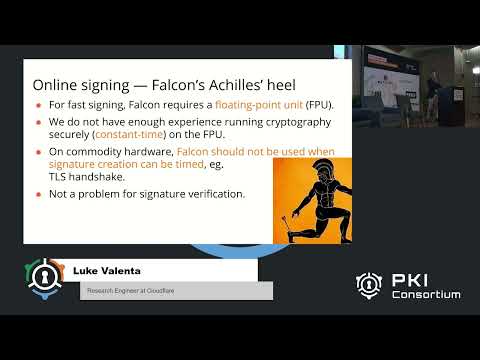
NIST standards are final and browsers ship post‑quantum key agreement, and Cloudflare reports over 30% of human connections using PQ key agreement, but signatures lag because they balloon certificate size: classical chains are ~1 KB, the smallest lattice signature hits ~14 KB and a hybrid Falcon+lattice approach is ~7 KB. Measured impact is about 1.5% slower per extra KB. Certificate Transparency and short lifetimes stress logs; practical mitigations include shipping intermediates out‑of‑band, KEM-based auth, or new “merry” certificate designs.
AI-written summary · about
chapters (12)
- 0:00Introduction
- 1:25Post-quantum certificates deployment
- 3:22Quantum threats to cryptography
- 5:50Key agreement migration challenges
- 8:18Key agreement deployment timeline
- 11:07Signature migration hurdles
- 13:20Certificate size impact
- 16:32Performance costs of PQ signatures
- 18:17Future-proofing PQ signatures
- 19:21PQ signature adoption timeline
- 20:23Risks of delayed migration
- 21:09Q&A
related talks
 28mBirth of the Post-Quantum Internet
 30mCoping with post-quantum signatures in the WebPKI
 01h 05mChallenges and Opportunities from Quantum-Safe Cryptography
 13mNavigating the Quantum Readiness Journey: Open-Source Cryptography, PKI and Signing Tools
 27mTurning Quantum Threats into Opportunities: Modernizing WebPKI with QUIC and Metrics-Driven Insights
 44mPost-quantum cryptography migration strategy for cloud services
 28mQuantum Proofing Sigstore: A Tale of Three Approaches
 30mNavigating the Quantum Readiness Journey: Securing Kubernetes with Quantum-Resis...