Modular Development with JDK 9
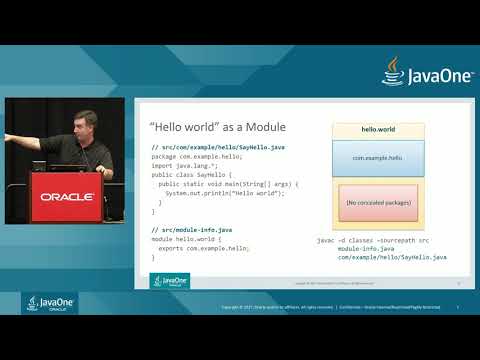
summary
JDK 9 replaces the monolithic classpath with a module system that breaks the JDK into dozens of modules, enforces strong encapsulation (private JDK packages cause illegal access errors—GlassFish fails on sun.security.policy.File), and guarantees no split packages and acyclic resolution at compile- and run-time. Migration uses automatic modules so legacy jars become modules on the module path; jdeps finds dependencies, jlink creates custom system images, and practical examples range from a 217-package JDK to a 110-jar Hadoop classpath.
AI-written summary · about
chapters (12)
- 0:00Start
- 2:12Part 1: Programming in the Large
- 5:40Java Base Module
- 6:30Encapsulation in JDK 9
- 13:56Running a Modular application
- 16:05Maven and JDK 9
- 24:56Part 2: Migrating to Modules
- 32:19Automatic Modules
- 34:08Key points to remember about the Migration to Modules
- 34:30Part 3: Modular JDK
- 37:15Compatibility with the Modular JDK
- 39:37Modular JDK Summary
related talks
 53mModular Development with JDK 9
 51mModular Development with JDK 9
 46mModular Development with JDK 9 and Beyond
 23mWhat should I care about JDK 9 module system?
 46mJDK 9, 10 and 11: Pitfalls For The Unwary
 45mPrepare for JDK 9
 49mTo JAR Hell And Back - A Live Migration to the Java 9 Module System
 47mJDK 9, 10, and 11: Pitfalls for the Unwary