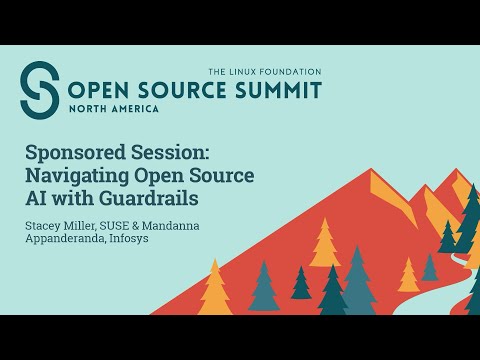
Sponsored Session: Navigating Open Source AI with Guardrails
summary
Conference slides cite McKinsey: 92% plan heavy AI investment, only 1% reach maturity and 44% of prototypes never hit production, so security is urgent. Two concrete guardrail layers are described — input guardrails that block PII or toxic prompts and output guardrails that validate LLM responses. Demonstrations use the Guardrails AI validator hub, an MIT‑licensed Infosys toolkit with LLM‑as‑judge, CI/OSS CVE vetting, red teaming, explainability APIs, online sub‑second enforcement, and a SUSE Kubernetes platform with built‑in AI observability.
AI-written summary · about
chapters (11)
- 0:00AI safety challenges
- 3:54AI security first
- 6:22Guardrails as defense
- 10:01Input/output guardrails
- 12:17Zero-trust AI platforms
- 15:33Guide to creating guardrails
- 17:21LLM judges beyond keywords
- 18:44Open-source AI guardrail framework
- 20:30Responsible AI with guardrails
- 21:13Handling toxic prompts
- 24:38Model safeguarding online/offline
related talks
 35mOpen Source Tools To Empower Ethical and Robust AI Systems
 26mOpen Source Tools To Empower Ethical and Robust AI Systems
 15mAI Guardrails for Enterprise Deployments
 31mUsing Guardrails.ai for building Generative AI apps
 40mKeep AI on Track: Guardrails + OpenTelemetry Observability
 35mMulti-Layered Guardrails for Cloud Native AI: Enforcin...
 17mLightning Talk: Navigating the Intersection: AI’s Role in Shaping the Secure Open Sour...
 34mBuilding Guardrails for AI Coding Systems