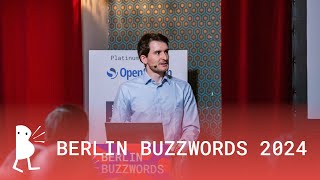
Enhancing RAG with Multi-Agent Integration

summary
Claims that integrating a knowledge graph (Neo4j AuraDB + Knowledge Graph Builder + Neo4j GenAI) with a two-LLM pipeline and graph-query agent reduces hallucination by validating across sources, then runs a vector search for final synthesis. Implements a multi-agent layer (examples: Autogen-style agents) that parallelizes retries, splits tasks (research/writer/review), and returns reconciled answers with a human-in-the-loop. Emphasizes moving toward fine-tuned small language models for cost and stability.
AI-written summary · about
chapters (10)
- 0:00Introduction to RAG
- 1:53Challenges in RAG systems
- 4:01Four-dimensional RAG architecture
- 6:31Testing and retry mechanisms
- 8:59Multi-agent frameworks explained
- 11:09Integrating graphs with multi-agents
- 13:38Human-in-the-loop improvement
- 14:41Evaluating performance factors
- 16:28Future with small language models
- 17:06Q&A session
related talks
 21mAgentic GraphRAG: Autonomous Knowledge Graph Construction and Adaptive Retrieval
 12mAgentic GraphRAG: Autonomous Knowledge Graph Construction and Adaptive Retrieval
 29mAgentic GraphRAG: Multi-Agent Knowledge Graph Construction for Research Teams
 32mBuilding Multi-Agent RAG Systems
 39mEnhancing RAG with Neo4j Knowledge Graph
 30mAgentic RAG Meets Neo4j: Multi-Hop Reasoning Over Scientific Knowledge Graphs
 29mTransparent Multi-Agent AI
 30mAgentic RAG with Knowledge Graphs Explained