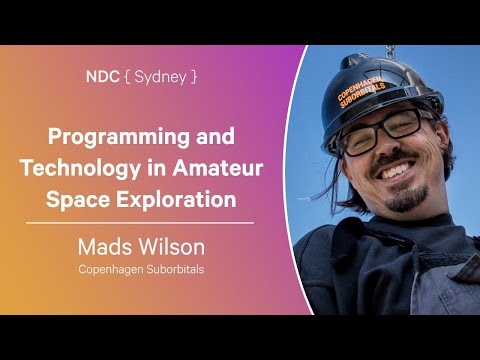
Programming and Technology in Amateur Space Exploration
summary
Copenhagen Suborbitals pursues a 100 km Kármán‑line flight with small, recoverable capsules and has launched seven test rockets since 2010; early heat1X fails (burned engine, capsule losses) push a shift to iterative small vehicles and 30+ engine hot‑fires. Flight electronics use Arduino Due embedded nodes in a redundant, per‑task architecture; propulsion is simple ethanol + LOX pressure‑fed engines with mixture/pressure failures. Live video runs over a modified 30 Mbps Wi‑Fi ship‑to‑shore link, funded by ~500 monthly supporters.
AI-written summary · about
chapters (24)
- 0:00Copenhagen Suborbitals intro
- 2:12Amateur spaceflight goals
- 8:17Why spaceflight is unique
- 13:11Re-entry dangers
- 17:50Capsule design for survival
- 21:21Early rocket failures
- 25:19Scaling rockets for tests
- 27:04Keeping rocket pointed
- 30:55Computer for spaceflight
- 34:10Rugged flight systems
- 35:58Data limits for radio
- 38:32Bandwidth vs signal
- 40:20Launch delays pressure
- 41:44First launch aftermath
- 45:03Analyzing failed launch
- 47:12Most work not rockets
- 49:00Consensus-driven decisions
- 50:24Engineering rabbit holes
- 51:30Legal parachute hurdles
- 52:51Funding via community
- 54:15Custom video systems
- 57:06The hidden work behind marine operations
- 57:51Nexø rocket status
- 58:14Q&A radiation parachutes funding