Keynote: Progressive Web Apps
summary
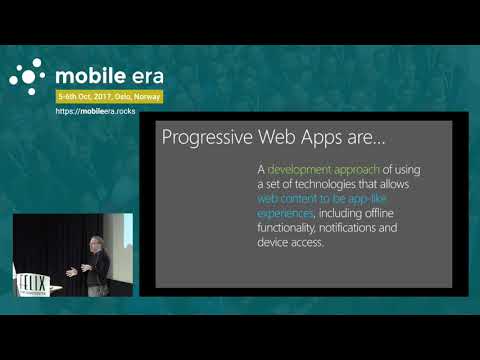
Progressive Web Apps claim to combine web distribution with native features by using an HTTPS-hosted JSON manifest and a controllable service worker to enable offline caching, background refresh and push. Tools shown include PWA Builder, Google Workbox, Mozilla’s ServiceWorker Cookbook and Lighthouse; measured wins: Forbes cuts mobile load from 6.5s to 2.5s with +10% impressions, Twitter Lite uses ~90% less data than the native app. PWAs install by use, update atomically, and work on low-end devices and flaky networks.
AI-written summary · about
chapters (22)
- 0:00Introduction
- 2:48Progressive Web Apps
- 5:57What are Progressive Web Apps
- 13:33Apps
- 14:21Things to do
- 16:57Expense system
- 18:46Expense report
- 20:08Mobile apps
- 22:14Mobile expense manager
- 23:24Web vs Native
- 25:50Negatives
- 30:30App Manifests
- 31:20Service Worker
- 33:21Tools and Resources
- 40:34The Opportunity
- 40:46Distribution Model
- 42:05PWAs
- 42:28Devices
- 42:42Simplify
- 43:05The PWA approach
- 43:36Negative
- 44:43Conclusion
related talks
 40mKeynote, Progressive Web Apps
 47mProgressive Web Apps
 38mProgressive Web Applications: The What, the Why and the How
 37mIntro to Progressive Web Apps
 49mIntro To Progressive Web Apps
 44mKeynote: Uncovering the secrets of Progressive Web Apps
 16mRevolutionize Your User Experience with Progressive Web Apps
 46mProgressive Web Apps with the Service Worker API