Solving All the Problems with systemd

summary
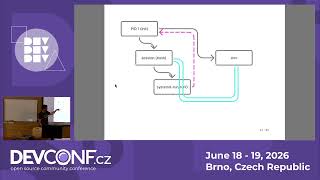
Demonstrates how systemd plus kernel features replace containers or init scripts by doing concrete things: using socket activation and SO_REUSEPORT to achieve zero‑downtime handoff between instances, creating template units for per‑port or per‑commit instances, using cgroups to enforce 20% CPU and 10 MB memory limits so only the offending unit is OOM‑killed, applying ProtectSystem=strict and private /tmp mounts for per‑service isolation, and using transient units / chroot to run container‑like services — shows code and a working Python helper for automation.
AI-written summary · about
chapters (9)
- 0:00Intro
- 0:40What is a service manager
- 1:30Your own service manager
- 2:57Why systemd
- 4:43How systemd works
- 8:58Templates
- 15:00How it works
- 16:14Cool things you can do
- 18:18Protect Home
related talks
 48mDemystifying Systemd for Embedded Systems
 35mNew security features in systemd
 01h 32mContainers – A Look Under the Hood
 01h 31mTutorial: Using Linux Primitives to Build Your Own Containers
 33mLinux Container Internals
 50mPortable Services Are Ready To Use
 39mContainers are Linux - but what does it mean?
 38msystemd @ Meta: From upstream to production