Sponsored Demo: Scaling EdTech at Hyperspeed: How PhysicsWallah Red...

summary
PhysicsWallah runs live classes on Amazon EKS, replaces Karpenter limits with CAST AI, and validates a read-only POC that estimates ~48.67% savings before touching production. CAST AI then applies workload rightsizing (WOOP) and node autoscaling, cutting CPU requests ~35% in production and reducing one cluster’s requested CPUs from ~1,104 to 465 (~52% reduction) for six‑figure USD savings, using multi-family spot pools to absorb 6–10x live spikes with zero production incidents.
AI-written summary · about
chapters (14)
- 0:00Scaling journey intro
- 1:04Scale and reliability challenges
- 3:09Live class traffic spikes
- 5:17Cluster optimization steps
- 7:46Four-week adoption timeline
- 9:50CPU optimization graph
- 11:14Cost savings and zero incidents
- 13:23Live class reliability
- 15:11Headroom strategy balance
- 16:55Key takeaways and ROI
- 17:58Pod disruption budgets
- 19:47Spot instances benefits
- 20:49Future GPU workloads
- 22:11Conclusion and Q&A
related talks
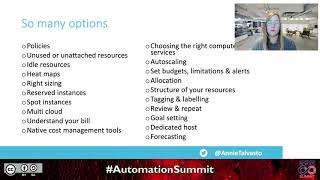 33mKubernetes cost optimization - How to actually do it
 43mKubernetes cost optimisation - How to actually do it
 26mScaling K8s Nodes Without Breaking the Bank or Your Sanity
 29mDevOps Practisting Platform on EKS with Karpenter autoscaling
 36mAutoscaling Isn't Set-and-Forget: Tuning KEDA & Karpenter for Real Workloads.
 58mAchieving unparalleled elasticity on AWS at the lowest cost
 01h 03mCloud Devops
 36mGroupless Autoscaling with Karpenter