Kubernetes cost optimization - How to actually do it
summary
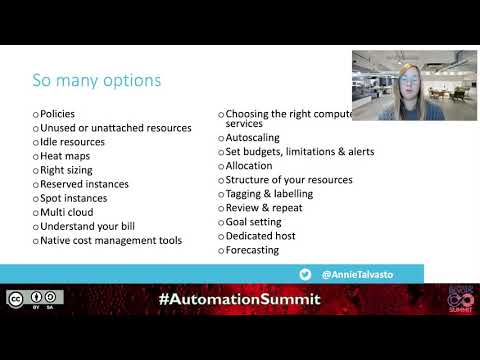
Claims concrete numbers: choosing the right VM family can cut compute line items by up to 50%, spot instances can be up to 90% cheaper but preemptible. Demonstration uses KEDA to autoscale from zero to ten order processors, handling ~150 queued orders and then downsizing, showing event-driven scaling removes wasted nodes. Recommended tools: KEDA, Kubecost, Cast AI, Spot.io, Helm, Flux. Barriers noted: 39% cite engineer inaction, 32% still use spreadsheets, so automation and visibility drive most wins.
AI-written summary · about
chapters (18)
- 0:00Intro
- 1:34Why does cost optimization matter
- 3:39Why is it so complex
- 5:24How does it work
- 8:30Three techniques
- 10:15Best practices
- 11:11Define your requirements
- 11:51Choose the right instance types
- 12:54Verify storage transfer limitations
- 13:18Check if workload is spot ready
- 14:04Spot Instances
- 15:01Group Spot Instances
- 15:44Mixed Instances
- 16:49Multiple Regions
- 17:14Summary
- 28:31Vendor solutions
- 29:46Recap
- 30:12Resources
related talks
 43mKubernetes cost optimisation - How to actually do it
 14mCut Costs, Not Performance: Implement Kubernetes Cost Optimization Strategies
 33mUncover Kubernetes cost-optimization trends
 34mKubernetes: Reducing Infrastructure cost and complexity
 39mOptimizing Resource Usage in Kubernetes
 43mBuilding Monetary Confidence in the Cloud
 21mHow you can scale up with Amazon EC2 for up to 90% less
 29mThe Frugal k8s Engineer: Strategies for Amazon EKS