Panel Discussion
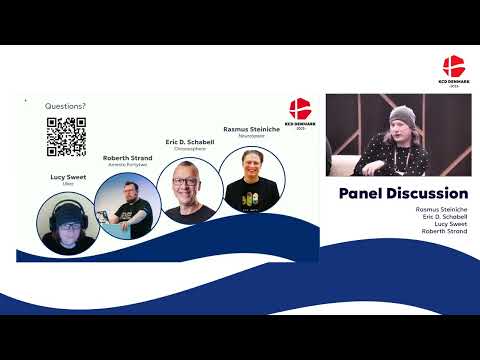
summary
A stateless compute platform migrates to Kubernetes and enforces require at least two containers to avoid single-container assumptions; platform teams struggle to please every developer and must learn to say no. Teams trial Slack auto-reply using generative AI for support with mixed results due to hallucinations and licensing mistakes. Kubernetes wins portability and reduces cloud lock‑in; adopt FinOps to quantify savings and watch the energy cost of model training when evaluating AI features.
AI-written summary · about
chapters (11)
- 0:00Panelist introductions
- 1:06Challenges in internal platforms
- 3:57Developer experience focus
- 5:21Future-proofing investments
- 6:23Generative AI in platforms
- 9:56AI and data center impact
- 13:06Platform engineering drawbacks
- 15:37Selling to management
- 19:13Standardization risks
- 21:01Business arguments for platforms
- 24:08Closing and Q&A
related talks
 54mPanel Discussion
 40mThe Elephant in the Kubernetes Room: Team Interactions
 33mKubernetes-Driven Multi-Cloud Deployments: Maximizing Scalability and Flexibility
 10mChallenges and Opportunities in Making AI Easy and Efficient with...
 06mSponsored Keynote: AI-Ready Platforms: Scaling Teams Without Scaling Costs
 42mMastering Kubernetes: Challenges, Strategies, and Best Practices
 41mTales of the mythical Cloud-Native Platform
 09mLightning Talk: Sailing Kubernetes Operation with AI Power