Modern Stoicism: How practice discipline and stay calm during the crisis

summary
Claims that Stoic practice is the roots of cognitive behavioral therapy and gives concrete tools: use Headspace or Calm for short meditations, run a night retrospective: good / wrong / improve / appreciate each evening, keep three‑to‑four journaling slots daily to record and reread anxious thoughts, and rehearse worst‑case scenarios to accept outcomes. Focus on control vs. circumstance to act only on what can change. Recommends The Daily Stoic, a 20‑exercise list, and Tim Ferriss podcast episodes.
AI-written summary · about
chapters (11)
- 0:00Introduction
- 5:17What is Stoicism
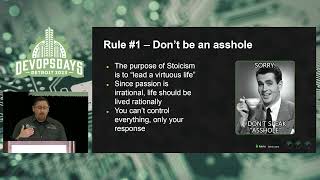
- 9:33Rules of Stoicism
- 11:29Be the best version of yourself
- 13:49Take responsibility practice
- 15:29Know your way
- 17:56Accept the worst
- 19:04equanimity gain
- 20:16stay focused
- 21:39what would the Batman do
- 22:39Resources
related talks
 31mCode, Calm, and Control Stoicism in Software Engineering
 05mSpacetime Management: Lessons from the Stoics
 22mHow Stoic Perspective Empowers Agile Leadership
 43mCalm in the chaos - a stoic guide to leading in the Permacrisis
 49mSurvival Under Fire: How to Stay Whole During Adversity
 20mAuthentic Self-Care and Wellness: Building Stress Resilience
 05mSpacetime Management: Lessons from the Stoics
 44mStress Driven Development, and How to Avoid It