Ethereum, Aeternity and the distributed wonders

summary
Ethereum is presented as a Turing‑complete generalization of Bitcoin where every node replicates contract execution rather than sharing workload, deployed solidity contracts get an address and can hold ether or self‑destruct, and consensus yields ~17.5 seconds per block. Interaction uses web3.js, gas limits execution to prevent DDoS, and testing happens on local chains or testnets. Real incidents (Parity multisig hacks) and alternative proposals like Aeternity’s functional‑style contracts show both fragility and concrete paths forward.
AI-written summary · about
chapters (6)
- 0:00Start
- 5:55Bitcoin is a ledger
- 10:57A ledger is a state-machine
- 20:07The constructor
- 23:09selfdestruct(address)
- 25:43Secure Online Shopping
related talks
 45mBuilding a Blockchain in Erlang
 13mInterview with Yanislav Malahov
 39mThe Blockchain Paradox
 31mEthereum from even more perspectives
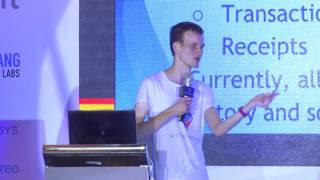 25mEthereum in 25 Minutes
 44mSolving real-world problems with distributed ledger technology
 24mOverview & Challenges of building a Blockchain
 40mWhat Ethereum Offers Developers