Exploring the Intersection Between OSS and Exit to Community
summary
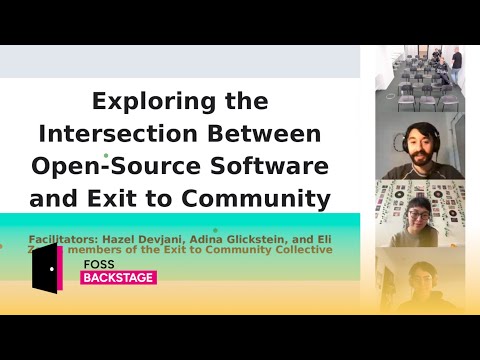
Workshop introduces Exit to Community as an exit strategy that transfers ownership to users workers and stakeholders claiming Nathan Schneider’s concept and pointing to concrete governance moves: Debian’s post-1996 constitution and elected project-leads, Python’s post-BDFL transition to a steering council via PEP process (PEP 816), and the failed 2016 Hasht campaign to make Twitter a user-owned public utility. The session links these cases to cooperative models (Mondragon electric co-ops) and offers an organizational-design framework plus a library of case snapshots for applying community ownership to OSS.
AI-written summary · about
chapters (7)
- 0:00Introduction to Exit to Community
- 2:31Exit to Community explained
- 5:21Tech startups need better ownership
- 7:33Why governance matters
- 10:41OSS and exit to community fit
- 13:34Case studies in governance
- 17:28Dreaming bigger for tech
related talks
 18mExit to Your Community
 36mThe Feedback Loop: Growing healthy open source projects
 29mThe new OSS community: Enabling for advocates not customers
 33mPanel: What’s Essential in an OSS Project Launch Playbook?
 01mWelcome to FOSS Backstage!
 25mLessons Learned from Cultivating Open Source Projects and Communities
 44mOf Queens and Other Benevolent Dictators – the Role of Succession Planning in Open Source Community
 28mThe Graceful Exit: Approaches for Changing One's Role in an Open Community