Programming with Yarn

summary
Argues that crochet functions as a programming language: stitches are instructions, yarn is data and the hook is a runtime/ compiler, with a standardised stitch vocabulary emerging around 1950. Demonstrates a live compile where managing two colour strands becomes multi-threading and unpicking rows acts like stepping through a debugger. Shows a small code editor app that generates C2C (corner‑to‑corner) patterns, estimates yarn and reads them aloud — a practical tool that speeds production and improves accessibility. Also cites Ravelry as a GitHub analogue and Project Jacquard and conductive thread hacks.
AI-written summary · about
chapters (10)
- 0:00Yarn crafts and programming
- 3:14Crochet and computing parallels
- 7:50Weaving looms to early computers
- 11:08Crochet as self-replicating software
- 13:21Technical aspects of crochet and programming
- 16:13Live demo: crochet runtime
- 19:24Hacking yarn with tech
- 22:35Digital crochet patterns
- 24:43Accessibility in yarn crafts
- 26:10Conclusion
related talks
 28mExploring Self-Embedded Knitting Programs with Twine
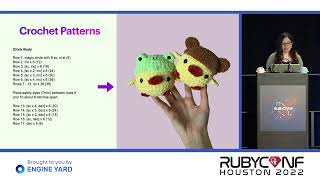 25mCrocheting & Coding: they're more similar than you think!
 28mWeaving algorithms: the threads that bind the python and textile communities
 41mLanguages for 3D Industrial Knitting
 18mSweaters as a Service
 36mComputer Assisted Arts and Crafts
 29mA Foolish Quest: Creating Knitting Patterns Using JavaScript
 26mKnitting for Javascripters