Microservices with Vase and Linkerd

summary
Vase builds HTTP services from an EDN service description with Pedestal routes, Clojure spec validation and versioned EDN, letting teams prototype by shipping a jar or posting the EDN. linkerd runs as a transparent sidecar/daemonset and supplies retries, exponential backoff, circuit breaking, routing and service discovery plus TLS and Zipkin tracing. Combining Vase for fast, data-driven services with linkerd for mesh-level resilience and telemetry enables safe canary shifts (example 10%/90%) and avoids baking cross-service retry logic into every service.
AI-written summary · about
chapters (21)
- 0:00Start
- 0:38Microservices vs. SOA
- 8:59Creating Vase Services
- 9:55Vase: Mission statement
- 10:50Production Quality?
- 13:15Service-Service?
- 13:33Vase: Action Literals
- 14:15Testing the limits of data- described service definitions
- 14:30Vase: Custom Interceptors
- 16:00Observability
- 16:36Resiliency
- 16:47Retry. Simple, right?
- 17:06Exponential backoff + jitter
- 17:26Circuit breakers
- 23:30Linkerd: Retries
- 23:45Linkerd: Routing
- 24:06Linkerd: Traffic Shifting
- 25:18How? HTTP Proxy.
- 26:08http-kit
- 28:04How? Forwarding Headers
- 28:33Why so synchronous?
related talks
 35mNavigating the Service Mesh Ecosystem
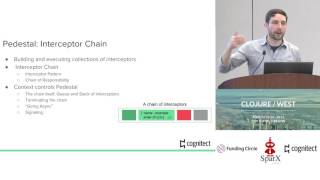 35mFaster Delivery with Pedestal and Vase
 39mGrow with Less Pains - Meshing From Monolith to Microservices
 40mDeep Dive: Linkerd
 37mIntro: Linkerd
 38mAsk Me Anything About Service Mesh
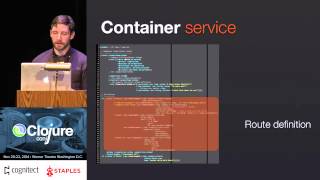 38mUnlocking data-driven systems
 34mFrom Monolith to Microservices with Kubernetes and Linkerd