How HTTP/2 works, and how Android developers can leverage it
summary
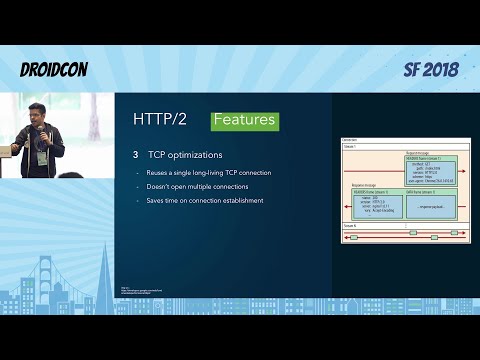
HTTP/2 (finalized 2015) replaces text framing with binary frames, adds header compression and stream priorities, and multiplexes many requests over one TCP connection; Android apps get it via OkHttp 3.9+ (URLConnection lacks support) and ALPN (Jetty ALPN or Google Play Services) on Lollipop+. A demo loads 380 tiled images showing HTTP/1 at 3.29 seconds and HTTP/2 cutting that time by over half; gains collapse when packet loss >2%. Future migration is HTTP/3/QUIC (Cronet available).
AI-written summary · about
chapters (14)
- 0:00Introduction and welcome
- 0:50Why HTTP/2 matters now
- 2:37HTTP/2 key benefits explained
- 5:08Head-of-line blocking and TCP
- 7:57Multiplexing and stream dependencies
- 9:42Binary protocol and header compression
- 12:12Server push and caching
- 13:59HTTP/2 limitations and HTTP/3
- 15:43Backend server setup for HTTP/2
- 18:32Android HTTP/2 with OkHttp
- 20:36Workarounds for older Android versions
- 23:23Live demo of HTTP/2 performance
- 25:22Future of HTTP and closing remarks
- 26:26Q&A and resources


