A deep dive into

summary
Pokémon Go hits $2 billion in 811 days to show in‑app billing works; Google Play Billing Library v2.0.3 is the concrete tool and wraps the system service via the BillingClient abstraction. Key implementation details: verify purchase tokens on a backend via the Google Play Developer API, handle consumeAsync and acknowledgePurchase (acknowledge within three days), subscribe to real‑time notifications via Google Cloud Pub/Sub, and expect caching and multi‑device onPurchasesUpdated quirks. Use internal testing or billingX for debug; static SKUs don’t cover subscriptions.
AI-written summary · about
chapters (18)
- 0:00Introduction and risk aversion
- 1:50In-app payments model
- 5:00Google Play billing fundamentals
- 13:31Library architecture overview
- 18:13Setup process pitfalls
- 20:19Products and subscriptions explained
- 26:16Retrieving product details
- 28:47Purchase history handling
- 30:55Purchase flow and UI
- 31:37Sample code analysis
- 33:23Backend integration necessity
- 34:06Purchase verification methods
- 35:32Consuming purchases
- 37:40Acknowledging purchases
- 38:45Real-time notifications
- 39:50Testing strategies
- 41:36Debugging tools
- 43:22Final thoughts and ethics
related talks
 44mTaking your users’ money: In-app billing from start to best practices
 49mTaking your users’ money: In-app billing from start to best practices
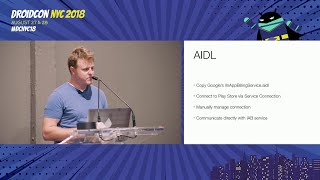 34mTesting In App Billing the Easy Way
 30mWhat's new with Play Billing
 41mMaking Money on Google Play
 36mGrow and optimize your subscriptions with new Google Play features
 19mMigrate to Google Play Billing
 44mThe State off in app purchases on Android