KEYNOTE: Building Reliable Data infrastructure for the Agentic Era
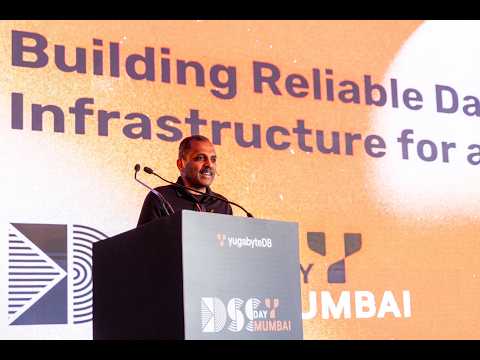
summary
Forecasts of 1.3 billion agents and a claim that multi-agent setups use 15x token cost drive the urgency: introduces Mego as an agent-native memory/knowledge/traceability layer (personal vs. shared memory, ephemeral vs. persistent), shows YugabyteDB as the distributed engine running it, and announces an unnamed multi-tenant PostgreSQL platform for fast, agent-driven DB provisioning. Covers failures (95% of generative AI projects cited), bursty serverless workloads, RPO/RTO and multi-cloud topology choices, and concrete operational tooling needs like observability, audit trails, and autoscaling.
AI-written summary · about
chapters (13)
- 0:00Welcome
- 1:09Agentic AI rise
- 3:38Multi-agent challenges
- 5:04Agent-native data needs
- 7:54Mego for agent memory
- 10:22Why memory layer matters
- 13:12Scalable memory layers
- 16:00Yugabyte DB foundation
- 19:13Prototypes to production
- 20:16Multi-tenant PostgreSQL
- 23:05Architect persona & agents
- 27:19About Yugabyte
- 29:06Closing & Q&A
related talks
 20mOpen Source Database Operations in the Age of AI
 24mScalable GenAI in Production
 47mAgentic AI with Commercial Databases
 26mbuilding reliable AI systems in production
 31mThe New Database Estate
 28mAgentic AI
 10mThe Factory That Dreams: 39 AI Agents, No Framework
 18mNext-Generation AI Agents: Orchestrating Technological Evolution