AI Agents That Remember, Share, and Cost Less with Meko | Introducing Meko

summary
Meko is an agent-native persistence layer built on Yugabyte and Weaviate that stores data packs containing distilled one-sentence memories, static knowledge, full conversations, and decision tracings. Agents run locally or via a small inference layer that extracts entity embeddings, generates memories to cut token use, and supports a promoted/shared workflow so memories remain private per agent until explicitly promoted. The stack reuses MemZero, a Mage (fork of Apache Age) graph layer, a RAG worker, and four internal agents; early access shows resumability and lower operating cost at scale.
AI-written summary · about
chapters (23)
- 0:00Introduction
- 1:17Opening remarks
- 2:01AI agent memory sharing challenge
- 3:25Need for shared learning
- 5:30Cost of isolated knowledge
- 6:32Introducing data packs and MCP
- 7:56Memory vs knowledge
- 9:21Multiple data types in packs
- 10:23Building platform from scratch
- 12:09Memory privacy and sharing
- 13:13Shared memories prevent mistakes
- 14:40Resumability across tools
- 15:42Security and human control
- 16:26Four primitives of Miko
- 16:49Transcripts and memory extraction
- 18:32What is Miko?
- 18:52Live demo of Miko portal
- 21:02Exploring data packs
- 22:27Promoting shared memories
- 23:28Data pack access roles
- 24:33Context sharing and team learning
- 25:17Real-world shared struggles
- 26:19Early access to Miko
related talks
 01h 49mBuilding Memory Augmented Agents with MemoRizz
 47mAgents and Memory Architecture
 18mArchitecting Agent Memory: Principles, Patterns, and Best Practices
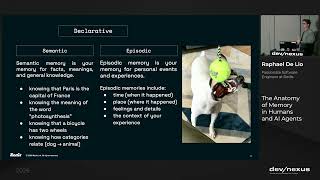 54mThe Anatomy of Memory in Humans and AI Agents
 26mStore Your AI Agent's Memory and Context in a Knowledge Graph
 58mAdvanced Autonomous AI Agents: Memory, Collaboration and Evolution in Action
 25mWhat does it take to build long-term state for AI agents?
 23mYour Agent Has Amnesia: Why Mobile AI Agents Need Memory to Be Useful