Maximizing Performance With GraalVM

summary
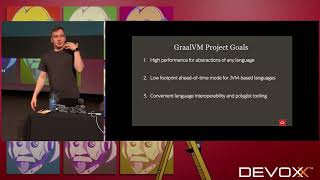
GraalVM acts as a drop-in JDK with two modes: the Graal JIT for top-tier runtime optimization and the GraalVM native-image ahead-of-time compiler that produces standalone binaries. A Micronaut microservice compiles to a ~45 MB executable that starts in 23 ms and uses about 40–48 MB RAM; JIT mode gives higher peak throughput but larger heap and warmup. Key wins come from aggressive inlining and escape analysis, plus optional profile-guided tuning.
AI-written summary · about
chapters (9)
- 0:00Introduction to GraalVM
- 2:26GraalVM capabilities overview
- 8:42Getting started with GraalVM
- 13:17Benchmarking Java performance
- 23:03JIT vs AOT compilation
- 34:27Demo: Micronaut with GraalVM
- 42:01Memory and startup optimization
- 45:53Best practices for Java code
- 48:50Production use cases and future
related talks
 56mMaximizing Performance with GraalVM
 20mMaximizing Java Application Performance with GraalVM
 59mMaximizing performance with GraalVM
 34mFast and Efficient Java Microservices with GraalVM
 03h 07mEverything you need to know about GraalVM
 47mGraalVM as a Platform for Cloud Native Java
 50mCloud native Java microservices with GraalVM
 48mRevolutionizing Java-based Applications with GraalVM.