Practical Raft Consensus

summary
Claims that Raft makes consensus simpler than Paxos and demonstrates a runnable design: a single leader accepts client commands, appends them to a durable log (optional BoltDB persistence), broadcasts AppendEntries RPC heartbeats and entries, and commits once a majority acknowledge. Elections use a randomized election timeout and incrementing terms; followers forward client requests and leaders resolve diverging state by decrementing prevIndex so the leader overwrites mismatches and brings nodes up to date.
AI-written summary · about
chapters (15)
- 0:00Raft consensus intro
- 2:31What is Raft consensus
- 6:20Leader election role
- 9:24Terms and timeouts
- 13:18Randomized election timeouts
- 16:51Log replication checks
- 18:39Raft implementation code
- 23:36State persistence
- 27:07Heartbeat and leader duties
- 30:42Handling vote requests
- 33:13Transitioning to leader
- 34:58Forwarding client requests
- 36:20Broadcasting logs and heartbeats
- 38:27Processing log responses
- 39:50Committing logs and logic
related talks
 15mRaft: Distributed Consensus for Dummies
 37mRaft - The Understandable Distributed Protocol
 21mUsing Raft in Rust
 59mSolving Raft's practical problems in Tarantool. What, how and why
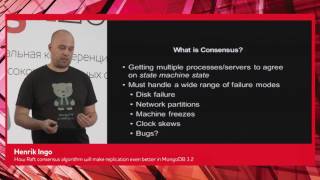 44mHow Raft consensus algorithm will make replication even better in MongoDB 3 2
 44mHow Raft consensus algorithm will make replication even better in MongoDB 3 2
 40mDeep Dive: etcd
 41mConsistent, Distributed Elixir