DIY Smart Home

summary
Seven years of hands‑on DIY smart home work yields specifics: Raspberry Pi zeros run a Mosquitto MQTT broker and Home Assistant, Zigbee and BLE gateways tie Ikea bulbs and Philips Hue into a single mesh, and custom code (a BLE decoder and an Ikea fix plugin) makes color and sensor data usable. Surprises: vendors change radio modules, 433 MHz modules fail at tens of centimeters, Raspberry Pi 3 thermal instability crashes services, and Home Assistant’s DB and public access assumptions cause real pain. Planned: mesh election for readers and open‑source releases.
AI-written summary · about
chapters (23)
- 0:00DIY smart home journey
- 3:25Defining smart home goals
- 5:57Zigbee network overview
- 7:45BLE and Wi-Fi devices
- 9:13MQTT and software centralization
- 10:18Problems with Ikea devices
- 13:11Open-source UI solutions
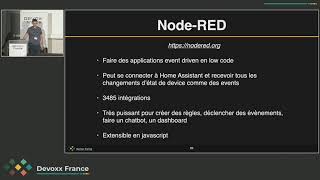
- 17:09Live demo and dashboard
- 22:31Home Assistant storage issues
- 23:55Device inventory choices
- 28:10Water meter AI analysis
- 29:56Testing sensors and mesh plans
- 30:37433 MHz failures
- 33:11Raspberry Pi stability issues
- 34:38No-neutral switch problems
- 35:43Zigbee2MQTT integration struggles
- 36:46DIY smart home philosophy
- 38:13Ease for non-developers
- 40:03Smart home security
- 41:12Matter protocol skepticism
- 42:57Outdoor remote access
- 44:45Gas heating optimization
- 47:17Conclusions and future plans
related talks
 32mOpen Source IoT at Home
 32mOpen source home automation
 51mSmart home from scratch - a little C#, a little C++ and cheap Chinese electronics
 49mUnbridled Home Automation, from Trash Bag to Wild Boar
 35mAgainst all odds, a cloudless smart home
 30mThe Internet Of Things
 40mHome Automation with MQTT
 46mIoT at home - The solution to all your spare time problems