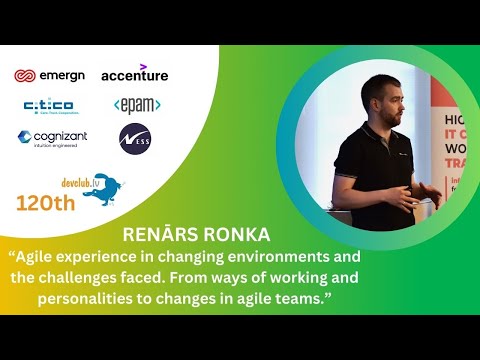
Agile experience in changing environments and the challenges faced
summary
Teams face frequent priority shifts every few weeks, multiple squads in one silo, and people reshuffles that break flow; concrete fixes that work or fail include introducing a single point of contact (two: tech lead for tech and a common mailbox for BA questions) to stop disruptive duplicate queries, running onboard newcomers two weeks early to align ways of working, keeping rotational on‑call for incidents, using quizzes and pair programming for bonding, and delegating specific retro action items for accountability.
AI-written summary · about
chapters (13)
- 0:00Start
- 3:20Project setups
- 4:24Way of Working
- 6:59Never underestimate ceremonies
- 9:26Interactions within and outside team
- 20:06Changing teams
- 23:26Allow your teams to work
- 24:33Standard
- 24:51Agile Product owner
- 25:57Business analyst
- 26:39Scrum Master
- 30:44Not everyone is fit for a role
- 31:11Key takeaways
related talks
 15mThe agile leadership mindset: Embracing continuous change as a leader
 23mManaging diverse engineers for high-impact deliveries
 18mAgile leadership and technical mastery, a harmonious alliance
 24mAgile working in a slow-moving world
 25mAgile: The Bad Parts - Matt Parker, Martina Hodges-Schell
 34mNative Agile Psychology of Teams and Individuals
 01h 02mGetting Unstuck. Strategies for Surviving in a Rapidly Changing Post-Agile World
 43mFrom an Agile Team to an Agile Organization