Game Development Infrastructure

summary
Describes a game studio’s infrastructure for storing and building versioned code and terabytes of binary art: they moved from Mercurial to git lfs to avoid costly compression/decompression, use LizardFS as an object store planning for 10–20 TB, and handle very large CI artifacts (one build ~23 GB) requiring isolated Unreal Engine instances. Services run in Docker with Jenkins for CI, Prometheus/Grafana monitoring, Elasticsearch logging, and Gentoo hosts on Proxmox virtualization.
AI-written summary · about
chapters (8)
- 0:00Introduction
- 3:20Game asset storage
- 11:53Artist file issues
- 16:53Storage and backups
- 21:58Unreal Engine build
- 24:38Monitoring and logging
- 28:35Server infrastructure
- 31:29Q&A
related talks
 20mCI/CD Infrastructure for Efficient Mobile Game Development
 44mTaking CI and automated testing seriously
 01h 01mDeploying Your Studio With the Cloud Game Development Toolkit
 54mHow to Apply the Software Engineering Process to the Gamedev Process
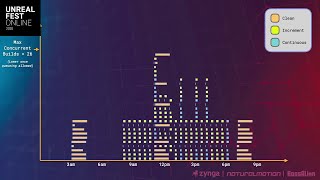 30mA Deep Dive into a Cross-Platform Build Farm
 42mBest Practices in Docker Continuous Delivery
 55mSo You're Trying to Support a Medium Sized Studio....
 47mSource Control & Remote Team Collaboration