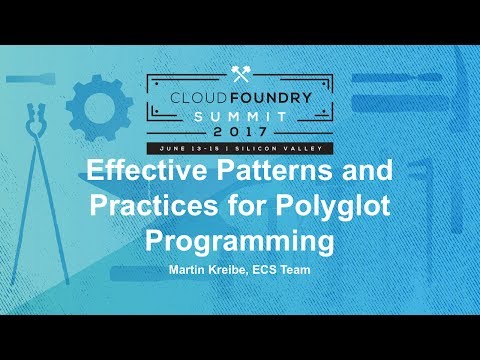
Effective Patterns and Practices for Polyglot Programming
summary
Argues polyglot is practical: replaced a monolith workflow engine (IBM BPM) with Golang heart replacement, completed and runnable on Cloud Foundry in two weeks, which sped delivery and energized the team. Recommends anti-corruption layer shims to route traffic during upgrades and break apart monoliths into language-appropriate services. Notes operations pushback and governance needs solved by using Cloud Foundry buildpacks and a limited set of supported languages rather than unlimited freedom.
AI-written summary · about
chapters (16)
- 0:00Introduction and thanks
- 1:28What is a polyglot programmer
- 3:15Why polyglot programming matters
- 5:47Polyglot in everyday systems
- 6:29Breaking down a polyglot app
- 7:30Why use different languages
- 8:57Future of programming languages
- 9:58Interface corruption layers
- 11:24Breaking up a monolith
- 13:55Q&A: Legacy monolith translation
- 16:48Q&A: Management nightmare concerns
- 18:55Q&A: API standardization benefits
- 20:21Q&A: DevOps and language choice
- 23:09Q&A: Operator stakeholder importance
- 24:14Q&A: DevOps mindset perspective
- 25:18Closing thoughts on polyglot
related talks
 52mProud to Be Polyglot!
 57mDesign Patterns in Dynamic and Functional Languages
 55mArchitectural Patterns for Rapid, Reliable, Frequent and Sustainable Development
 45mFunctional Programming in the Large - Status and Perspective
 01h 02mFishbowl @ Functional Conf
 31mBuilding a Sustainable CodeBase with FP
 55mRevisiting Design Patterns After 20
 46mWhy you can't use GO! (away from anti-patterns)